Industrial Stainless Steel Mixing Tanks: The 2026 Engineering Guide to Liquid Blending
[TL;DR / Key Takeaways]
|
Industrial Stainless Steel Mixing Tanks: The 2026 Engineering Guide to Liquid Blending
Introduction: The Science of Professional Blending
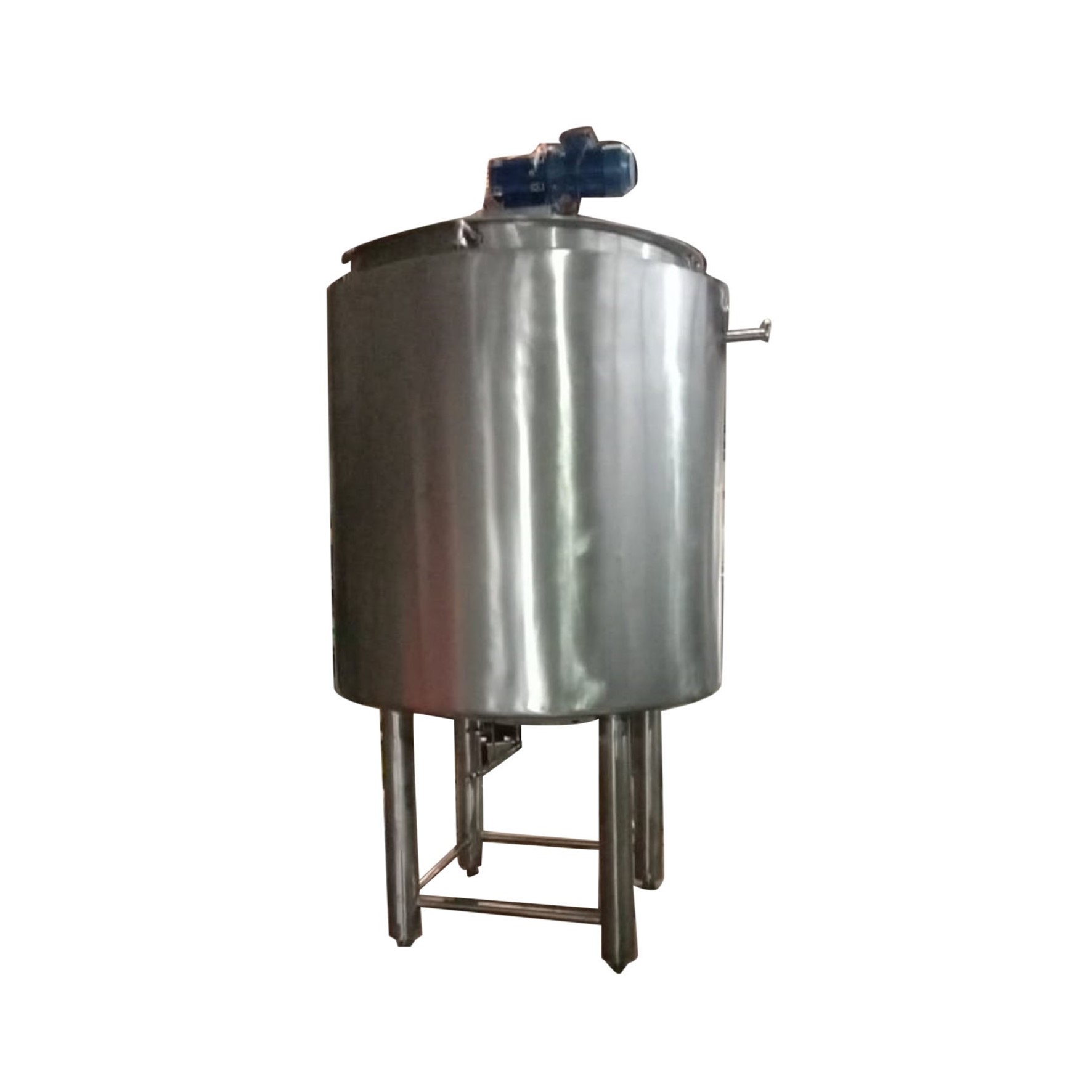
In industrial manufacturing, mixing is rarely as simple as stirring a pot. It is a precise mechanical process designed to combine ingredients with different densities, viscosities, and chemical properties into a single, stable output. Whether you are blending fruit juices, emulsifying pharmaceutical creams, or preparing industrial detergents, the Industrial Stainless Steel Mixing Tanks are the heart of any production line.
In 2026, the Kenyan manufacturing sector is moving toward higher automation and stricter quality control. Consumers expect every bottle of product to have the exact same consistency and quality. Achieving this requires a vessel that is not just a container, but an engineered system capable of precise agitation and temperature management. Investing in the right mixing technology is the most effective way to eliminate batch-to-batch inconsistency and reduce production waste.
1. Engineering Parameters of the Vessel: Design and Geometry
The physical shape of a mixing tank significantly influences how fluid moves inside it. A poorly designed tank creates “dead zones” where ingredients settle and remain unmixed, leading to failed batches.
Tank Bottom Profiles
- Conical Bottoms: This is the most popular choice for high-viscosity products (thick liquids). The steep slope ensures “Total Discharge,” meaning you can empty 100% of the product through the bottom valve without leaving waste behind.
- Dished Bottoms: Common in high-pressure applications. The rounded shape provides superior structural strength and excellent fluid turnover for lighter liquids.
The Role of Internal Baffles
If you stir a liquid in a perfectly smooth, round tank, it will eventually just swirl in a circle like a whirlpool (a vortex). This is inefficient and often sucks unwanted air into the product. To prevent this, we install Internal Baffles—vertical plates attached to the inner wall. These break the swirling motion and force the liquid to move up and down, ensuring a much more thorough and faster blend.
2. Agitation Technology: Choosing the Right Blade
The “Agitator” is the mechanical assembly that does the actual work. Selecting the wrong agitator is the most common mistake made by new manufacturers.
Propeller and Turbine Agitators
These are designed for low-viscosity liquids, such as water-based drinks or thin oils. They move at higher speeds and create a “jet” of fluid that moves through the tank. They are excellent for quick blending of soluble ingredients.
Anchor and Paddle Mixers
For thick products like honey, heavy syrups, or certain paints, a high-speed propeller will simply “cut” through the liquid without moving the whole mass. Anchor agitators are designed to sweep close to the tank walls, physically pushing the heavy product and ensuring uniform heat transfer from the tank’s jacket.
High-Shear Emulsifiers
In industries like cosmetics (lotions) or food (mayonnaise), you often need to mix two things that naturally repel each other, like oil and water. A High-Shear Mixer uses a specialized rotor-stator head to physically “tear” droplets into microscopic sizes, creating a stable emulsion that won’t separate on the shelf.
3. Material Science: Grade 304 vs. Grade 316L
In an industrial mixing environment, the steel is under constant stress from both the mechanical movement and the chemical nature of the ingredients.
- Grade 304 Stainless Steel: This is used for about 80% of food and beverage applications. It is highly resistant to rust and easy to sanitize. It is the standard for water, milk, and most beverages.
- Grade 316L Stainless Steel: This contains Molybdenum, which makes it far more resistant to “pitting” and corrosion. It is essential if your product contains high levels of salt, strong acids, or if you are manufacturing pharmaceuticals.
Technical Tip: Using Grade 316L for the inner “wetted” part of the tank and Grade 304 for the outer support structure is a common way to maximize durability while managing costs.
4. Temperature Management: Jacketed Mixing Tanks
Many mixing processes require the product to be at a specific temperature. For example, some ingredients only dissolve in hot water, while others (like dairy) must be kept cool to prevent spoilage.
Dimple Jackets and Coil Jackets
A “Jacketed Tank” features a second outer skin. A heating or cooling medium (like steam, hot water, or chilled glycol) circulates in the space between the two skins.
- Dimple Jackets: These are excellent for steam heating because the “dimples” create turbulence, which transfers heat into the tank much faster.
- Half-Pipe Jackets: Often used for cooling applications where high-pressure fluids are involved.
5. 2026 Pricing for Mixing Tanks in Kenya
Prices vary based on the thickness of the steel, the motor’s horsepower, and whether the tank is jacketed for heating/cooling.
| Capacity (Liters) | Configuration | Estimated 2026 Price (KSh) |
| 200L | Single Wall / Standard Agitator | 220,000 – 280,000 |
| 500L | Jacketed / High-Torque Motor | 450,000 – 580,000 |
| 1,000L | Jacketed / High-Shear Mixer | 750,000 – 950,000 |
| 2,000L+ | Industrial Duty / VFD Control | 1,200,000 – 1,800,000+ |
Note: Always ensure the price includes the Control Panel and VFD (Variable Frequency Drive). The VFD is essential for adjusting the speed of the motor to suit different products.
6. Maintenance and Sanitary Standards
Because mixing tanks often handle “sticky” or high-protein ingredients, hygiene is paramount. A tank that is difficult to clean will eventually contaminate your product.
- Mirror Polish Finish: The interior of an industrial tank should have a “Sanitary Mirror Polish” (measured as Ra < 0.4µm). This ensures there are no microscopic “peaks and valleys” where bacteria can hide.
- CIP (Clean-In-Place) Integration: For tanks larger than 500L, manual scrubbing is inefficient. We install Rotary Spray Balls that allow you to pump cleaning chemicals through the system, sanitizing the entire interior in minutes without opening the tank.
- Mechanical Seal Maintenance: The point where the agitator shaft enters the tank is the most common failure point. These seals must be checked for leaks monthly to prevent motor oil from entering the product or product from escaping the tank.
7. The ROI of Custom-Built Mixing Systems
Why should a manufacturer choose a custom Raydan mixing tank over a generic import?
- Motor Sizing: Many generic tanks come with motors that are either too weak (leading to burnouts) or too powerful (wasting electricity). We size the motor to the specific viscosity of your product.
- Batch Time Reduction: A correctly designed agitator can cut mixing time by 50%. If you can produce two batches in the time it used to take for one, your production capacity doubles without increasing your labor costs.
- Local Spare Parts: If a motor or a seal fails on a generic import, you might wait weeks for a replacement. With a locally fabricated system, parts and technical support are available in Nairobi within hours.
Industrial Stainless Steel Mixing Tanks
People Also Ask (FAQ)
- Can I use one tank to mix different products?
Yes, provided the tank is properly cleaned between batches. For businesses moving between flavors or colors, we recommend a high-spec CIP system to ensure no cross-contamination. - What is a VFD and why do I need it?
A Variable Frequency Drive (VFD) allows you to change the speed of the mixer. This is vital because a mix that is too fast can cause “foaming” or aeration, while a mix that is too slow won’t achieve homogenization. - Do you provide heating elements with the jacketed tanks?
We can configure the tank for Electric Heating (using immersion elements in a water jacket), Gas Heating, or for connection to an existing Steam Boiler. - How do I prevent air bubbles in my product?
Air is often sucked in when the agitator speed is too high or the blade design is wrong. For products like lotions, we often recommend Vacuum Mixing, which pulls the air out of the tank during the process. - How long does a stainless steel mixing tank last?
When built with Grade 304 or 316L steel and maintained correctly, these tanks are 20-year assets. The mechanical parts (motor/gearbox) may need servicing, but the vessel itself is nearly permanent.
Optimize Your Mixing Process Today- Order any of our industrial stainless steel mixing tanks that suits your needs
Stop settling for inconsistent batches and inefficient production. Upgrade to a mixing system that is engineered for your specific product and built to survive the rigors of industrial use.
Contact Raydan Stainless Steel Fabricators:
- Call/WhatsApp: +254 707 307 451 | +254 707 307 451
- Email: customercare@raydanstainlesssteelfabricators.co.ke
- Visit Us: Enterprise Road, Industrial Area, Nairobi.