Industrial Stainless Steel Holding Tanks: The 2026 Guide to Liquid Storage Excellence
[TL;DR / Key Takeaways]
|
Industrial Stainless Steel Holding Tanks: The 2026 Guide to Liquid Storage Excellence
Introduction: The Invisible Backbone of Industrial Production
In the complex world of industrial manufacturing, the holding tank is a sophisticated piece of engineering designed to protect high-value raw materials. Whether it is a dairy plant in Nairobi or a pharmaceutical lab in Thika, the holding tank does more than just “store” liquid; it preserves the chemical profile, temperature, and sterility of the product before it moves to the next stage of processing. This therefore makes investing in high quality industrial stainless steel holding tanks a very critical business decision.
In 2026, as local regulations from KEBS and the Pharmacy and Poisons Board become stricter, high-quality stainless steel has transitioned from a luxury to a baseline requirement. Investing in professional-grade storage ensures that your facility remains compliant, minimizes product loss, and avoids the contamination risks associated with inferior materials.
1. Why Stainless Steel Trumps All Other Materials
When designing a storage facility, the material choice determines the safety and longevity of the entire production line. Industrial experts consistently favor stainless steel over plastic (HDPE) or carbon steel for several reasons:
- Resistance to Biofilms
Plastic tanks often develop microscopic scratches from abrasive cleaning or UV degradation. These scratches become breeding grounds for bacteria, known as biofilms, which are resistant to standard sanitization. Stainless steel, especially with a Sanitary Mirror Polish, remains smooth at the molecular level, preventing bacterial adhesion.
- Thermal Stability
Many industrial processes involve storing liquids at high temperatures (such as boiler feed water) or require rapid cooling. Plastic tanks warp or become brittle when exposed to thermal fluctuations. Stainless steel maintains its tensile strength and structural shape, ensuring that seals and valves remain leak-proof even under extreme temperature changes.
- Chemical Neutrality
Stainless steel is an inert material. It does not “leach” contaminants into the stored liquid. In contrast, certain plastics can release bisphenols or microplastics into the product, particularly when storing acidic liquids or when exposed to the high ambient temperatures common in Kenya.
2. Material Science: Choosing Between Grade 304 and 316L
Selecting the correct grade of steel is essential for the durability of your tank. Using the wrong grade can lead to premature corrosion and structural failure.
| Feature | Grade 304 Stainless Steel | Grade 316L Stainless Steel |
| Composition | 18% Chromium, 8% Nickel | 16% Chromium, 10% Nickel, 2% Molybdenum |
| Corrosion Resistance | Excellent for freshwater and dairy | Superior (Resists Chlorides and Acids) |
| Primary Use in Kenya | Water storage, Milk, Beverages | Pharma, Chemicals, Cosmetics |
| Durability | High | Maximum |
Technical Insight: If your facility is located in a coastal region like Mombasa, or if you use chlorine-based sanitizers, Grade 316L is necessary. The addition of Molybdenum prevents “pitting corrosion” caused by salt air and harsh cleaning chemicals.
3. Critical Design Features of Industrial Holding Tanks
A well-engineered tank is designed for maximum efficiency and ease of maintenance. At Raydan, we focus on several key design elements:
- Total Discharge Geometry
A flat-bottom tank is difficult to clean and often leaves “dead spots” where old product can settle. Our tanks utilize Deep Conical Bottoms (typically with a 15° to 60° slope). This ensures that the tank can be completely drained, leaving no residue to contaminate the next batch.
- Internal Baffles for Agitation
For liquids that tend to separate—such as raw milk or chemical suspensions—integrated internal baffles are used. These work alongside an agitator to create controlled turbulence, keeping the liquid homogenous without creating air-trapping vortices.
- Pressure and Vacuum Management
As a tank empties, it creates a vacuum that can cause structural implosion if not managed. We install Sanitary Air Breathers with high-efficiency filters. These allow the tank to “breathe” while blocking airborne dust, microbes, and insects from entering the storage environment.
4. Industry-Specific Applications in Kenya
- The Dairy Sector: Preservation of the Cold Chain
In the dairy industry, holding tanks store raw milk before processing. These tanks are typically Triple-Jacketed. The inner layer holds the product, the middle layer circulates chilled glycol, and the outer layer consists of high-density insulation. This setup maintains milk at a steady 4°C, even during power interruptions.
- Pharmaceuticals: High-Purity Storage
Pharmaceutical tanks require specialized welding techniques, such as Orbital Welding, and an electro-polished finish. Every weld must be perfectly smooth because even a 1mm irregularity can harbor bacterial colonies. These tanks often include “shadowless” manways that sit flush with the tank wall to eliminate crevices.
- Industrial Water Treatment
For factories using Reverse Osmosis (RO) systems, stainless steel tanks are used to store purified water. Because highly purified water is “aggressive” and can pull minerals from its container, stainless steel is the only material that remains unreactive, preserving the water’s low conductivity.
5. Maintenance and Hygiene Protocols
To protect your investment and ensure product safety, a strict maintenance schedule is required:
- CIP (Clean-In-Place) Systems: Modern tanks should be cleaned using automated Rotary Spray Balls. These provide 360-degree coverage with high-pressure detergents, eliminating the need for manual scrubbing which can scratch the steel.
- Passivation Treatments: Every few years, tanks should be treated with a mild nitric acid solution. This process restores the Passive Layer—the chromium-oxide film that naturally prevents rust.
- Gasket Inspection: Seals and gaskets are the most common points of failure. We recommend replacing EPDM or Silicone seals annually to prevent leaks and “crevice contamination” where bacteria can hide.
6. ROI Analysis: The Economic Case for Stainless Steel
A 5,000L plastic tank is significantly cheaper initially than a stainless steel version. However, the long-term economics favor steel:
- Lifecycle Costs: Plastic tanks in industrial settings often require replacement every 3–5 years due to structural fatigue or UV damage. A stainless steel tank is a one-time investment with a 30-year service life.
- Risk Mitigation: A single contaminated batch of milk or chemicals can cost your business hundreds of thousands of shillings. Stainless steel virtually eliminates the risk of material-based contamination.
- Asset Value: Stainless steel is a high-value commodity. Even after decades of use, the tank retains significant resale or scrap value, whereas an old plastic tank is an environmental liability.
7. Why Raydan is the Preferred Manufacturer in Kenya
As the leading food-grade stainless steel fabricators in Nairobi, Raydan offers more than just welding; we offer industrial solutions tailored to the Kenyan environment.
- Custom Engineering: We build tanks to fit your specific factory layout, including custom heights and footprint requirements.
- Local Technical Support: Our Nairobi-based team provides rapid on-site assistance for installations, upgrades, and maintenance.
- Regulatory Compliance: Our designs are engineered to help your facility pass KEBS and ISO audits with ease.
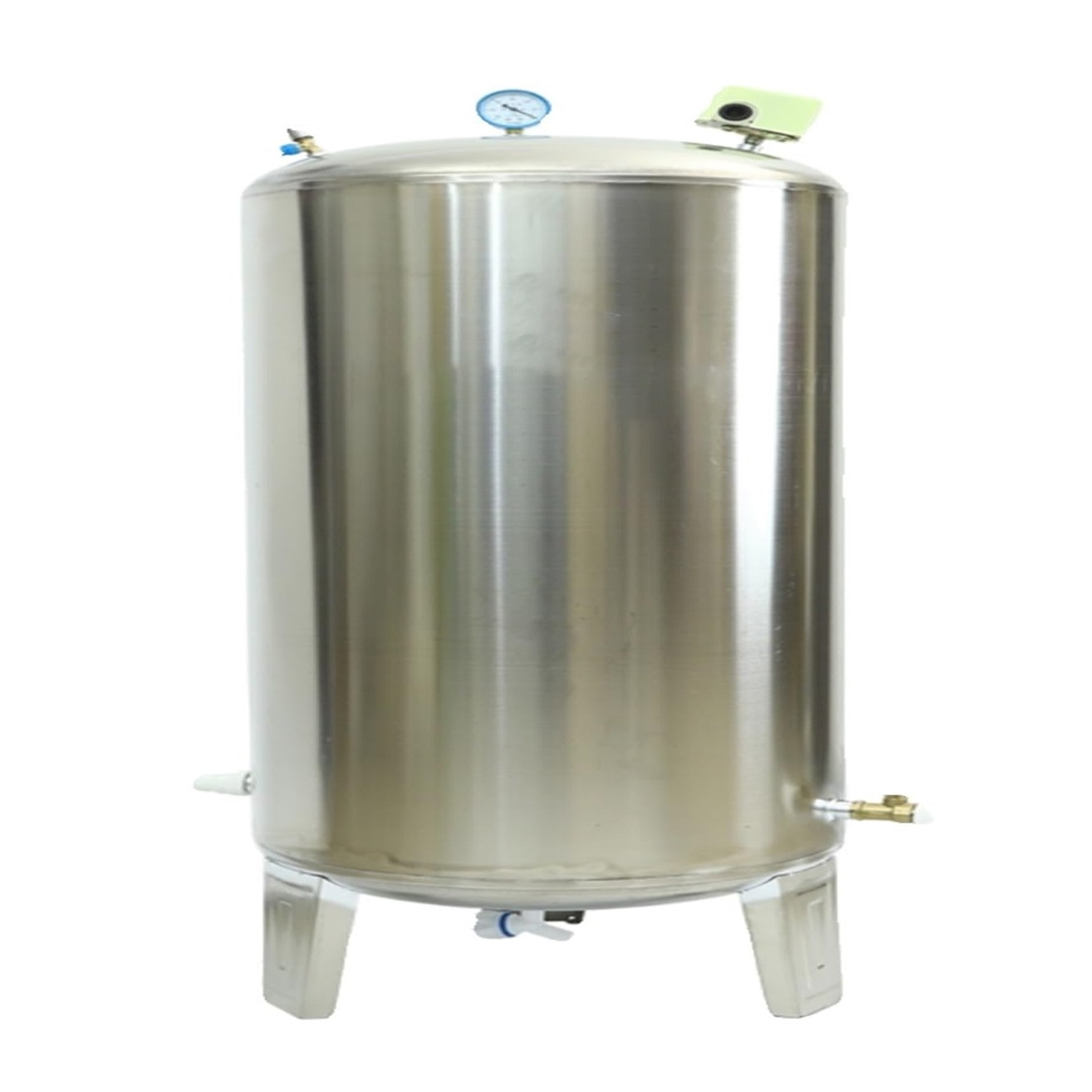
Industrial Stainless Steel Holding Tanks
People Also Ask (FAQ)
- Can I use a standard holding tank for fermentation?
While a holding tank can store fermented products, a dedicated fermenter requires additional features like pressure-rated lids, specialized cooling jackets, and CO2 venting systems. - How do I know if I need Grade 304 or 316L?
Grade 304 is sufficient for water and dairy. If you are storing liquids with a pH below 4.5 (acidic) or high salt content, Grade 316L is required to prevent corrosion. - Do you provide the stands and access ladders?
Yes. We fabricate heavy-duty stands (in either painted mild steel or stainless steel) and safety-rated ladders or mezzanines for larger installations. - What is the typical lead time for a custom tank?
Standard fabrication for a custom 5,000L or 10,000L tank typically takes 14 to 21 working days, depending on the complexity of the jacketing. - Can these tanks be moved after installation?
Yes. Our tanks are equipped with heavy-duty lifting lugs and modular skids, allowing them to be relocated if you expand or move your production facility.
Secure Your Production Safety Today With our Industrial Stainless Steel Holding Tanks- Get in Touch to Place Your Order
Don’t compromise your brand’s reputation with substandard storage solutions. Upgrade to a Raydan Industrial Holding Tank and ensure the highest standards of hygiene and durability for your facility.
Contact Raydan Stainless Steel Fabricators Today:
- Call/WhatsApp: +254 798 70 30 77 | +254 707 307 451
- Email: customercare@raydanstainlesssteelfabricators.co.ke
- Location: Enterprise Road, Industrial Area, Nairobi.